
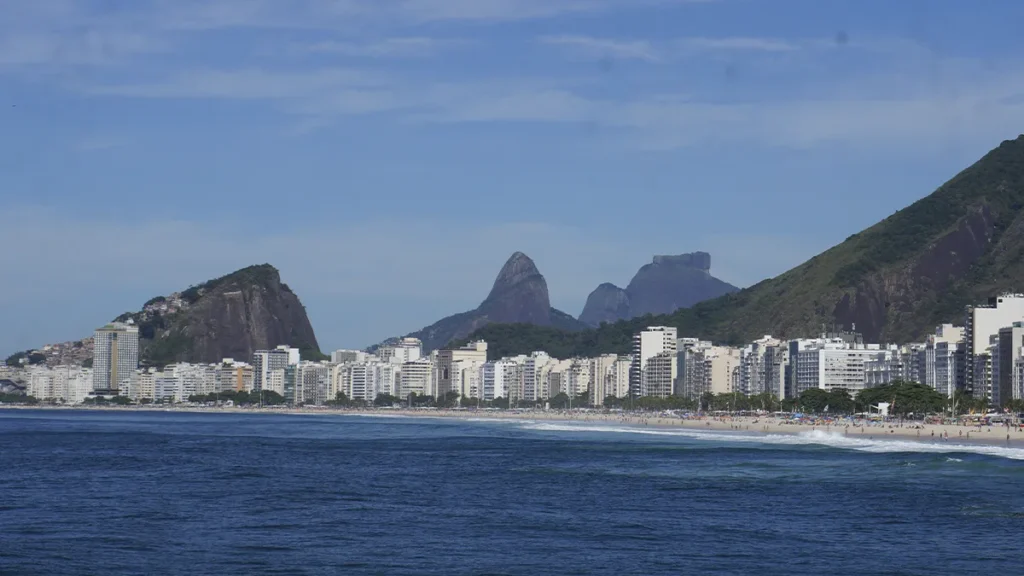
Summer in Rio de Janeiro is not a season; it’s an oven baking frozen chickens. A 40°C (104°F) day with a heat index of 50°C (122°F) makes the subway the best place to live in Rio.
Whether you live here or are staying in the South Zone, summer requires strategy. You only leave the house with a logistics plan that includes shade, hydration, and the full awareness that the city is going to roast you. If you want to enjoy the best of Rio without looking like a lost tourist (or a boiled shrimp), follow this manual.
1. Where to Set Up Your Base (Your Umbrella)
Understand one thing: in the South Zone, the sand is not just a regular public space; it is deeply territorial. Each Posto (lifeguard station) has its own “constitution” and practically its own soundtrack. If you pick the wrong spot, you will feel like a penguin in the Sahara or someone wearing a business suit at a baile funk.
Here is the diplomatic map so you don’t get lost:
Leme: The “Peace and Love” Refuge
Leme is the neighborhood’s backyard. It’s where the locals go wearing flip-flops, a canga (beach towel) over the shoulder, and zero pressure to show off.
- The Vibe: Family-friendly, calm, and featuring the unbeatable view of the Leme rock wall.
- The Crowd: Seniors who dive into the ocean at 7 AM (come rain or shine), families with small children, and people wanting to escape the tourist chaos of central Copacabana.
- Local Tip: It is the best spot for a late afternoon swim, and it’s the part of the beach with the widest stretch of sand—meaning there is plenty of room.
- Sports: Leme has various sports activities happening on the sand; we could say it’s an open-air gym. In reality, every beach in Rio is an open-air gym, but in Leme, because the sand area is massive, the gym is even bigger. From what I remember, Leme has Footvolley, Beach Tennis, Beach Volleyball, Soccer, and Altinha (keeping the soccer ball airborne) all happening right there.
Postos 2 and 3: Tourists + Locals + Visitors | All Mixed Together
The crowd from the Copacabana Palace and other luxury hotels in the area mixes with the crowd coming from other parts of Rio exiting the Cardeal Arcoverde subway station, as well as local residents. It’s a total human salad!
- On the sand, you will find plenty of sports being played.
- At night, this is one of the busiest parts of the boardwalk, with crowds enjoying the beach kiosks and mostly taking photos of the Copacabana Palace.
- In this area, the sheer number of restaurants, supermarkets, pharmacies, pés-sujos (traditional dive bars), snack bars, podrões (street burgers), street vendors, hardware stores, bakeries, pharmacies (did I mention pharmacies already?), and tour agencies would fill a small town. It is A LOT. This variety is great because it serves both those with money to burn and those running short on cash.
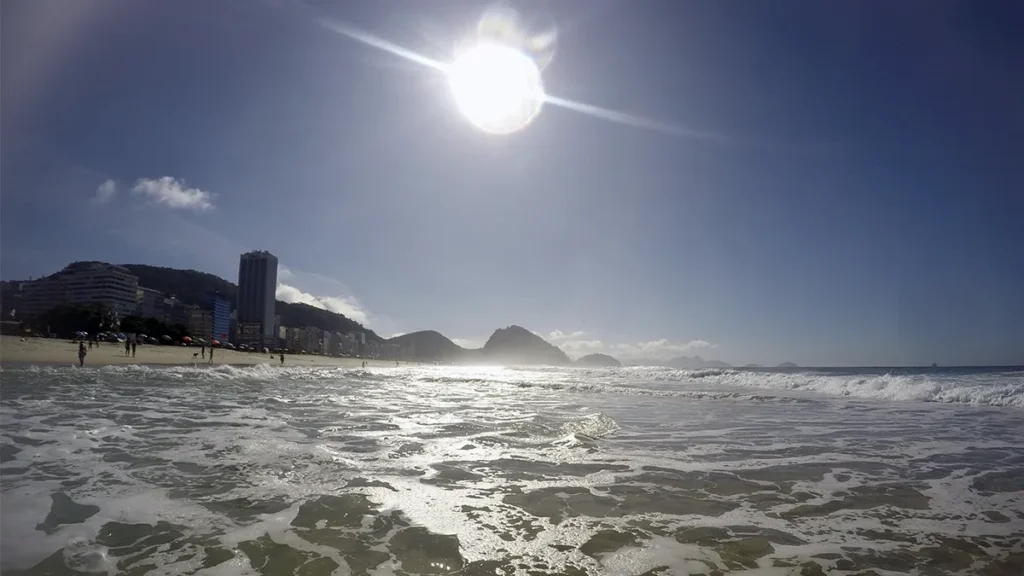
Postos 5 and 6: A Controversial Area
- At Posto 6, the sea is like a lake. It’s the perfect place for Stand Up Paddleboarding (SUP) and for anyone terrified of waves crashing into their chest.
- At Posto 5, when the sea is rough, it becomes the perfect spot for surfing.
- However, at these two stations, the strip of sand is extremely narrow. In the peak of summer, the fight for 10cm² of space is real. If you blink, the tip of your neighbor’s beach umbrella becomes your new hair accessory. You sit on the sand, and before you know it, there is someone else sitting right next to you—and I mean really next to you, practically sharing your canga.
- The Crowd: Athletes, open-water swimmers, and people who enjoy watching the fishing boats move at the Z-13 Fishermen’s Colony. If you want a calm sea but a crowded beach, this is your place.
Ipanema and Arpoador: The “Carão” and the Sacred Ritual
If Copacabana is cosmopolitan, Ipanema is a fashion runway.
- Arpoador: The temple of Carioca surfing. In the summer, the sun sets directly into the ocean and the crowd applauds. Yes, Cariocas applaud the sun. If you don’t applaud or if you scoff at it, it’s 30 years of bad luck. It’s a ritual of gratitude for surviving another day of hellish heat.
- Posto 9: The epicenter of the LGBT crowd, the carão (intense posing/attitude), and the birthplace of local trends. Want to know what will be trendy next winter? Look at the crowd at Posto 9 in January.
- Posto 10: Where the body is your business card. This is the zone for the fitness crowd, beach volleyball, and highly competitive footvolley.
The Sand Diplomat: The Barraqueiro (Beach Tent Vendor)
In Rio, you don’t just “rent” a chair; you establish a geopolitical alliance. Your barraqueiro is your best friend, your backpack security guard, and your concierge. Being loyal to a specific tent vendor is more important than a marriage contract. If you switch vendors without a valid reason, you will be seen as a diplomatic traitor. A true barraqueiro knows exactly how you like your mate (iced tea) and saves your strategic spot in the sun.
2. Survival Gastronomy: The Sacred Summer Combo
Your diet changes completely when it hits 42°C (107°F). The Carioca metabolism in the summer runs on three fundamental pillars:
Mate and Biscoito Globo
Don’t try to understand it, just accept it. A cup of Mate from the vendor’s metal barrels (with plenty of ice and a generous splash of lime juice) combined with a bag of sweet or salty Biscoito Globo (puffed polyvinylic starch biscuits) is the only meal that makes sense under the midday sun. The sound of the Mate vendor shouting on the sand is the sound of salvation. Many other snacks have tried to conquer the beach over the decades, but only Biscoito Globo stood the test of time.
The Post-Beach Açaí
Carioca açaí is not a dessert; it’s a recovery supplement. After three hours under the sun and two ocean dips, your body begs for that bowl topped with granola and banana. It’s what gives you the energy to face the uphill walk home or the bus line.


- My Personal Recommendation: On Avenida Nossa Senhora de Copacabana, right behind the Copacabana Palace, there is a tiny snack bar. It doesn’t even have places to sit—you grab your açaí and leave. Their açaí is sensational. In my opinion, this place has had the best açaí in Rio for about 25 years.
The “PF” (Prato Feito) That Resurrects You
The ultimate secret of the South Zone resident is fleeing the tourist-trap restaurants on the oceanfront. The authentic Carioca knows that the best value is found at the pés-sujos (traditional corner bars) on the inner streets, like Barata Ribeiro or Visconde de Pirajá. A traditional Prato Feito (a set plate with rice, beans, steak, and french fries) is the only thing capable of stabilizing your blood pressure after a day of extreme heat.
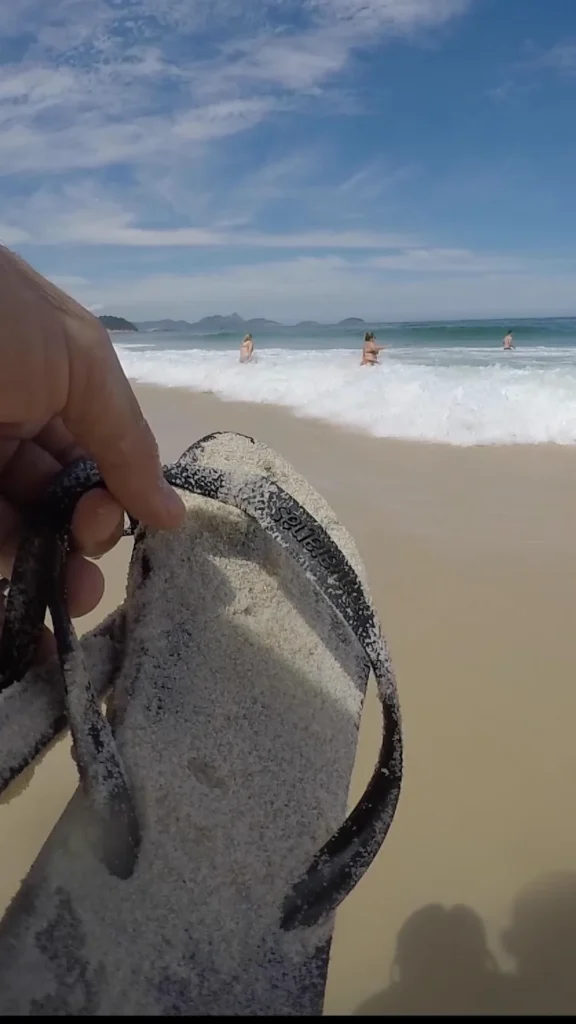
3. How to Walk Around Without Melting
Transportation during Rio’s summer is a sub-chapter of Dante’s Divine Comedy. Rule number one is: never, under any circumstance, attempt to leave the beach at 6 PM on a sunny Sunday. You will get stuck in a human and metal traffic jam that can last for hours.
Conscious Walking: If you have to walk, always use the side of the sidewalk that has shade (the “Side B”). A native Carioca mentally maps out which building awnings in Copacabana provide the best shade throughout the day.
The Subway Oasis: The air conditioning on the Line 4 subway is the eighth wonder of the modern world. In the summer, it becomes the refuge for the desperate. The ride between General Osório and Jardim Oceânico stations is the exact moment your soul returns to your body.
The Bus Air Conditioning: It’s a lottery. Sometimes the bus feels like the mountain freezing temperatures in winter; other times it is a mobile sauna smelling of sunscreen and sea breeze.
4. What is Mandatory in Your Backpack
To avoid becoming a “lost tourist” meme with second-degree burns, your backpack needs tactical items:
- SPF 50+ Sunscreen: In Rio, SPF 30 is just a scented moisturizer. The sun here does not play games.
- Canga: It works to sit on, to dry yourself off, and you can even tie the corners together to turn it into a bag. It’s the most versatile accessory in Rio.
- Mate Money Kept Separate from Your Phone: A basic safety tip. Keep the cash for your beach drinks and snacks easily accessible so you don’t have to open your backpack or pull out your phone every time.
- A Frozen 1.5L Bottle of Water: Start your day with it completely frozen. As the ice melts under the sun, you will have ice-cold water all day long. It’s a classic trick for anyone who refuses to pay hotel prices for a tiny cup of water.
Find Inspiration in the Chaos
Surviving the summer in the South Zone is an art form that requires patience, humor, and a lot of sunscreen. It’s about understanding that Rio is not for amateurs, but at the end of the day, with the sun setting and that ocean breeze blowing (even if it’s still 32°C/90°F), you realize you wouldn’t trade this chaos for any other place in the world.
Final Tip: If the temperature gets too high, don’t complain. Just dive in. The cold ocean water of the South Zone is the only air conditioner that never fails and doesn’t charge you an electric bill.